
Wilson Turned Off The Cameras Near The Stadium, Advocates Demand More

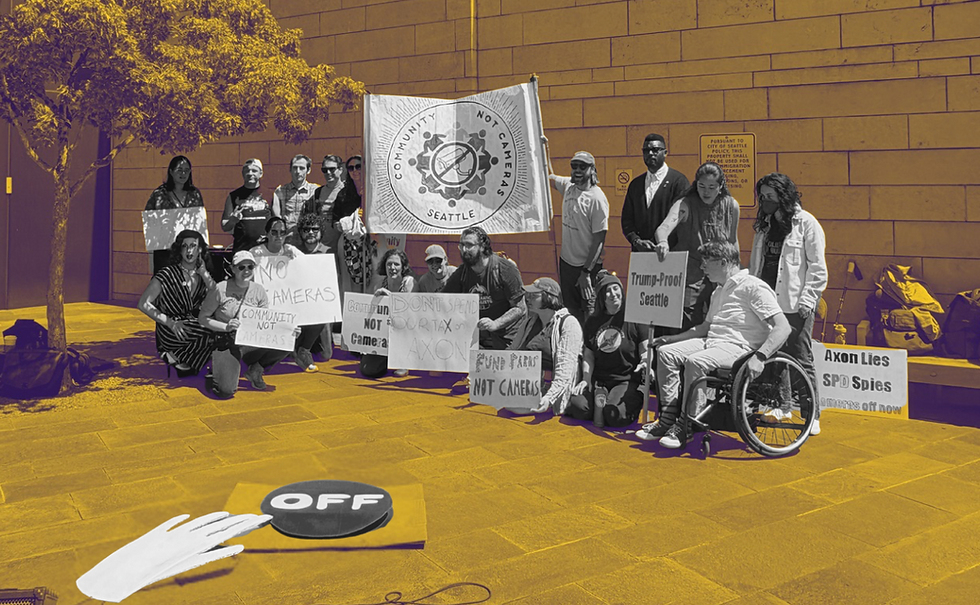
To the surprise of some of her critics, Mayor Katie Wilson followed through on her promise to shut off Seattle Police Department’s (SPD) Real Time Crime Center (RTCC) cameras the City recently installed around the stadium after Seattle wrapped its hosting duties for the FIFA World Cup. Additionally, she reaffirmed that the cameras around the stadium will remain off and no new cameras will go live until the City has reviewed the recommendations of an ongoing audit.
“I believe we can keep our city safe while also protecting our privacy, but finding the best path to that goal will require continued focus and attention, with community at the table,” Wilson wrote. “So, as we take these next steps forward, I commit to continue being direct and transparent about our use of technology and our protections against potential abuse — and to keep listening as we go.”
But the announcement Tuesday morning still left something to be desired for the supporters-turned-skeptics organizing against the surveillance state. At a rally Tuesday afternoon, advocates demanded Wilson not just turn off the cameras around the stadium, but unplug them by end of Tuesday and remove them by the end of the week. Not only that, the advocates still want her to disband SPD’s RTCC program.
It seemed advocates expected to have to fight Wilson to turn the cameras off. Afterall, activists under the “Community Not Cameras” banner planned a rally for the day after the final FIFA match in Seattle to call on the Mayor to follow through.
The unease of the anti-surveillance advocates makes sense. Wilson has strained her relationship with some of her progressive base over this very issue.
Last fall, while she tried to draw a distinction between herself and the incumbent she sought to topple, Wilson (perhaps only somewhat sincerely) glommed onto the intense, anti-surveillence blowback then-Mayor Bruce Harrell faced for pushing a major expansion to SPD’s untested RTCC pilot program.
“Turning on more cameras won’t magically make our neighborhoods safer,” Wilson’s campaign said in an Instagram post last Septmeber. “But it will certainly make our neighbors more vulnerable. As the Trump administration escalates its attacks on immigrants, trans people, and big cities in general, we need to prioritize safety, not surveillance.”
But once she got elected, Wilson would not commit to using her new power to actually stop the expansion that she once opposed, even as cities across Washington began rethink or remove their own surveillance systems. Eventually strong public pressure from all angles squeezed Wilson to announce a half-measure that pleased few. She decided to pause the expansion and pay for an audit before greenlighting any more cameras. Wilson did make an exception for a large swaths of that expansion, installing and then eventually turning on a bunch of cameras near the stadium during the World Cup games in Seattle to help the cops respond to potential terror attacks. No such attack occured.
The advocates at Tuesday’s rally expressed their appreciation for Wilson’s quick action to turn the cameras off, but they still want more. They have not abandoned their demand to shut the whole system off. And, perhaps more urgently, they want to know without a doubt that the cameras are not still recording. Many of the cameras around the stadium are still plugged in, leaving advocates uneasy, especially considering how little they trust Wilson right now.
When The Burner asked what assurance the Mayor’s office could give that the cameras were not secretly rolling, a mayoral spokesperson, Sage Wilson (no relation), explained that the cameras were turned off via a Power over Ethernet Switch. “As the cameras are not receiving power, they are not operational, and not capable of recording.”
The demand to unplug the camera cabinets, Wilson argued, would require bucket trucks, which means more money and time sucked up by this camera ordeal. The Mayor’s office did not meet activists' demand to unplug the cameras by end of day Tuesday and it doesn’t look like removal by Friday will happen either.
Still, both Community Not Cameras activists and Wilson can claim at least partial victories. Wilson kept her word, while advocates' sustained pressure ensured the promise remained politically difficult to break. But the real fight will resume once the City receives the audit's findings. To critics, the audit has always looked less like an independent fact-finding exercise than a way for the Mayor to buy time—and perhaps political cover—before making a final call on cameras.


Comments